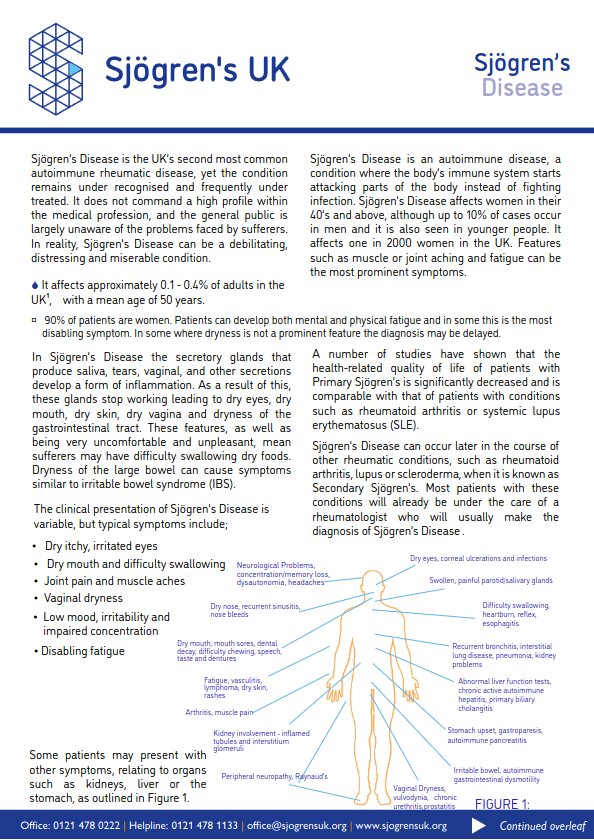
is the UK’s second most common autoimmune rheumatic disease, yet the condition remains under recognised and frequently under treated. It does not command a high profile within the medical profession, and the general public is largely unaware of the problems faced by sufferers. In reality, Sjögren’s can be a debilitating, distressing and miserable condition.
It affects approximately 0.6% of adults in the UK, with a mean age of 50 years
90% of patients are women
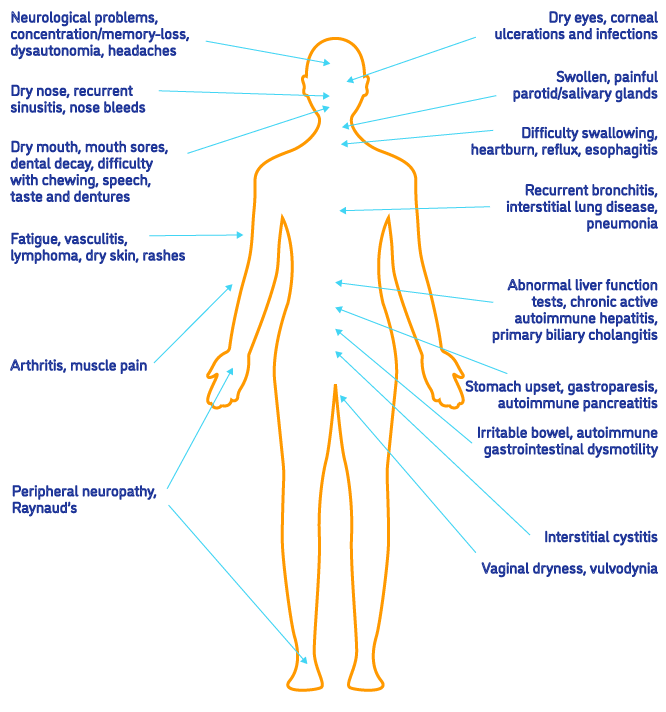
In Sjögren’s the secretory glands that produce saliva, tears, vaginal, and other secretions develop a form of inflammation. As a result of this, these glands stop working leading to dry eyes, dry mouth, dry skin, dry vagina and dryness of the gastrointestinal tract. These features, as well as being very uncomfortable and unpleasant, mean sufferers may have difficulty swallowing dry foods. Dryness of the large bowel can cause symptoms similar to irritable bowel syndrome (IBS).
The clinical presentation of Sjögren’s is variable, but typical early symptoms include:
Dry itchy, irritated eyes
Joint pain and muscle aches
Disabling fatigue
Dry mouth and difficulty swallowing
Low mood, irritability and impaired concentration
Some patients present with different symptoms which are systemic, but also resulting from Sjögren’s.
GENERAL
Information Sheet
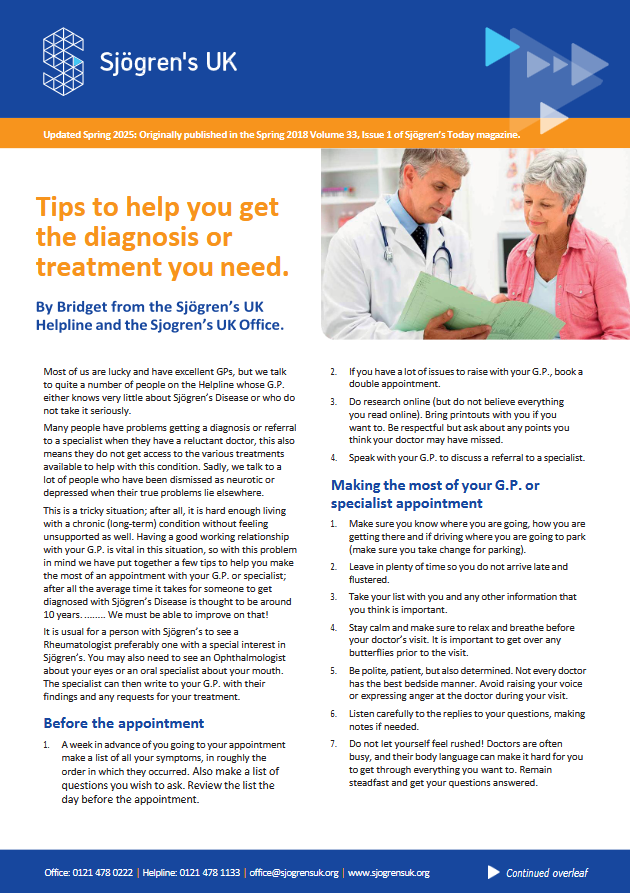
Tips to help you get the diagnosis or treatment you need
Tips for Travelling
Taking part in clinical studies - risks and benefits
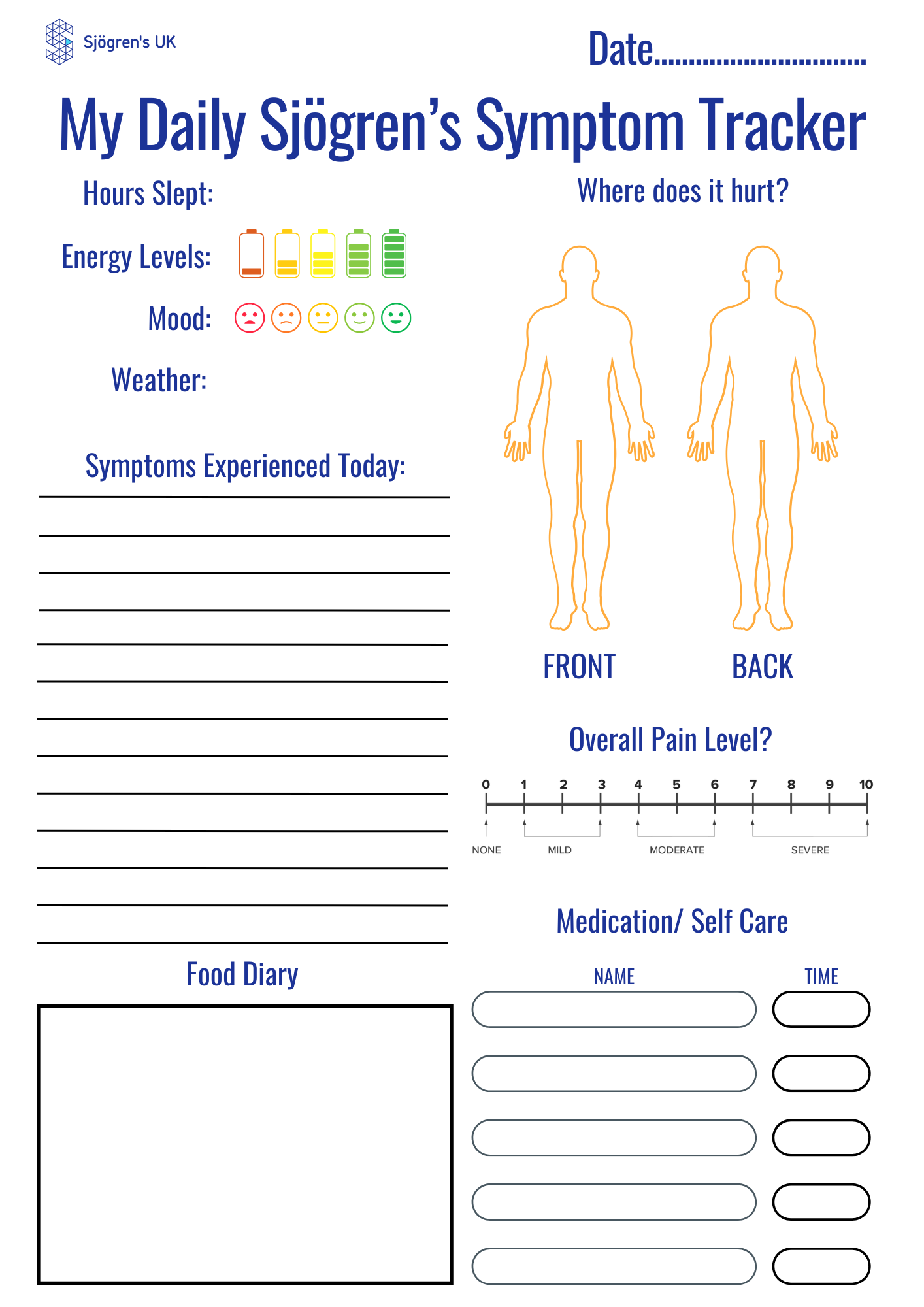
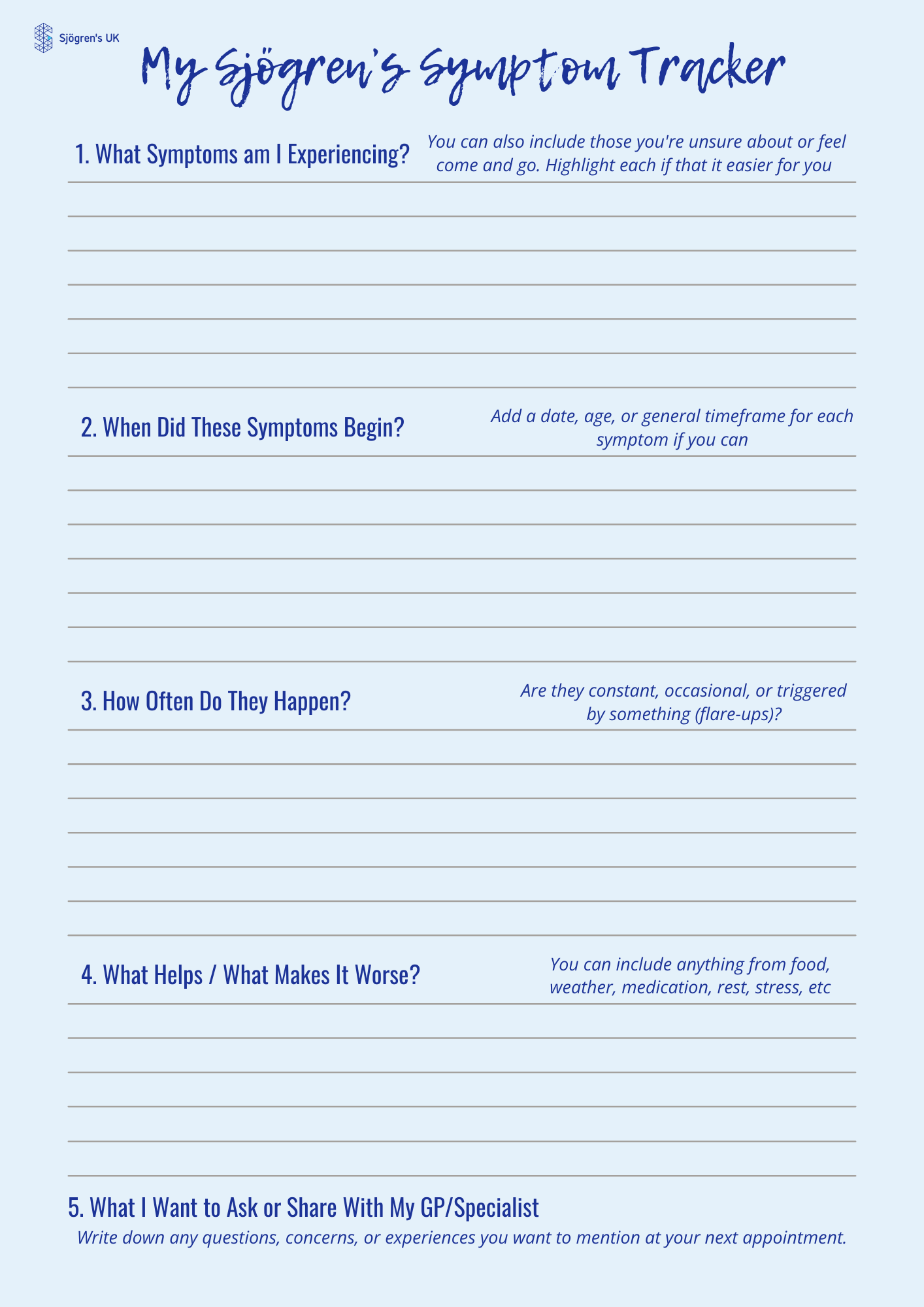
Sjögren’s Daily Symptom Tracker
Sjögren’s Symptom Tracker
BODY
Specific Nutrition
Understanding Fatigue
A view from the physio room
Complimentary medicine: Is it right for you?
Coping with Sjögren's Syndrome
Diagnosing Sjögren's Syndrome
Forget about the mouth, what about the rest of me?
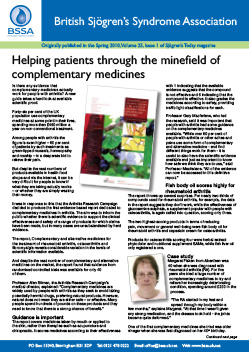
Helping patients through the minefield of complimentary medicines
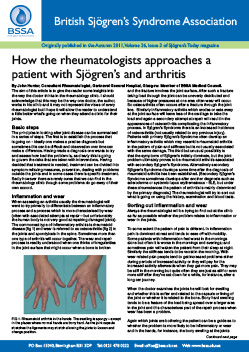
How rheumatologists approach a patient with Sjögren's Syndrome and arthritis
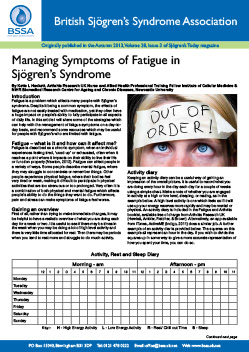
Managing symptons of fatigue
Sjögren's and acupuncture
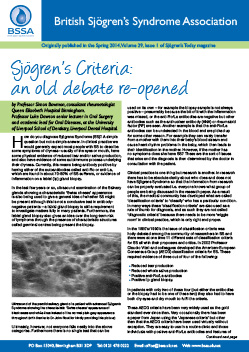
Sjögren's Citeria An Old Debate Reopened
Sjögren's Syndrome - Can herbal medicine help? A case study
Sjögren's Syndrome and Diet
Sjögren's Syndrome and the skin
The benefit of exercise
The short term relationship between discomfort, sleep fatigue in Sjögren's Syndrome and Rheumatoid Arthritis
Systemic features
Skin problems in patients with Sjögren's Syndrome
EYES
Investigation and Management of Dry Eyes
No tears to shed
Punctal plugs and dry eyes
The tear film - unseen but essential
Treatment of dry eyes
When I look into your eyes
HEAD
Brain fog: Is it Sjögren's Syndrome?
Headache in Sjögren's Syndrome
MOUTH
Care of Dry Mouth
All aboard the bandwagon
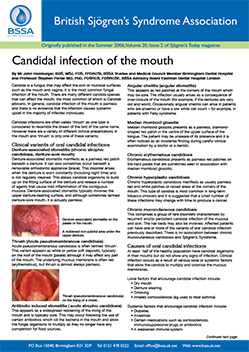
Candidal Infection Of The Mouth
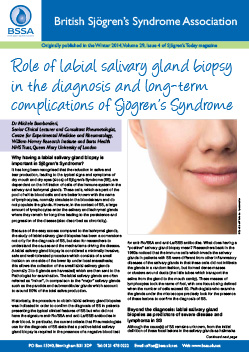
Labial Salivary Gland Biopsy
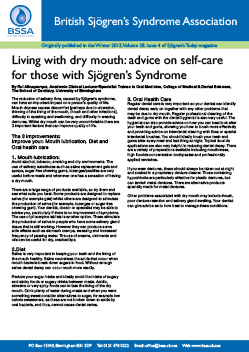
Living with Dry Mouth
Management of dry mouth and failing teeth
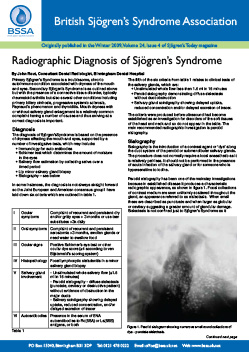
Radiographic diagnosis of Sjögren's Syndrome
Sjögren's Syndrome and oral health
ORGANS
Respiratory Tract
A primer of the neurological complications of Sjögren's Syndrome
Gastrointestinal and liver complications of Sjögren's Syndrome
Pregnancy in Sjögren's Syndrome and Neonatal Lupus
Primary Sjögren's Syndrome and cardiovascular risk
Respiratory Involvement in Sjögren's Syndrome
Urological and gynecological disease in Sjögren's Syndrome
Office: 0121 478 0222
Monday to Thursday: 9am – 4pm
(answer phone facility out of hours) Helpline: 0121 478 1133
Monday to Wednesday: 9:30am – 4pm
Thursday to Friday: 9:30am – 8pm